
Custom Railings in Alameda, CA | Stair, Glass, Balcony & Metal Railings
We design, fabricate, and install custom iron, cable, glass, and aluminum railings built for the Bay's salt air and seismic reality. Every railing is made to order for your space, never sold off the shelf. Free on-site estimates across Alameda County.
- Licensed & Insured
- Custom Fabrication
- Free On-Site Estimates
- Locally Owned & Operated
Custom Railing in Alameda & the East Bay
Alameda Custom Railing designs, fabricates, and installs railings built for one of the toughest environments in California: an island city ringed by salt water and sitting on the doorstep of the Hayward Fault. We are a locally owned and operated ornamental-metal shop serving Alameda and the wider East Bay, and we build wrought iron, stainless cable, tempered glass, and powder-coated aluminum railings to fit your home, deck, staircase, or commercial property. Every railing is fabricated in our shop, welded and finished by hand, then installed and anchored to meet current California Building Code guard and handrail rules.
Because we do our own fabrication, you are not choosing from a catalog of stock parts. You get a railing measured to your openings, drawn to your style, and finished to survive marine air, wind-driven rain, and ground movement. We are licensed and insured, we bring more than 20 years of experience in the trade, we back our work with C-23 ornamental-metal fabrication craftsmanship, and we start every project the same way: with a free on-site estimate where we measure, talk through materials and finishes, and give you honest ranges before anything is ordered. Call (510) 390-9618 to set up a visit.
Why Alameda Custom Railing
20+ Years of Experience
With more than two decades in the trade, we bring proven expertise and craftsmanship to every custom railing project across the East Bay.
Salt-Air & Seismic Engineering
Alameda is an island near sea level, so marine corrosion is the default, not the exception, and the Hayward Fault runs right through the East Bay. We spec 316 marine-grade stainless cable, powder-coat over zinc primer, and hot-dip galvanizing where it counts, then anchor posts and base plates properly so a railing holds up to salt spray and ground movement.
Custom In-Shop Fabrication
We cut, weld, and finish your railing in our own shop, not on a truck. That means tight fit-up around real-world corners, stairs, and out-of-plumb walls, plus the freedom to build a design that is actually yours instead of bolting together stock panels.
Licensed, Insured & Code-Compliant
We are licensed and insured, and we build to the California Building and Residential Codes: 42-inch guard height where required, openings that reject a 4-inch sphere, and graspable handrails. We tell you what your local East Bay department expects so the final inspection is a formality.
Material & Style Range
Hand-forged ornamental iron, sleek horizontal stainless cable, frameless tempered glass, and low-maintenance powder-coated aluminum, all under one roof. If you are not sure what fits your home or budget, we walk you through the trade-offs in plain language.
Local East Bay Service
We are based in the East Bay and work Alameda, Oakland, Berkeley, San Leandro, Hayward, and Castro Valley every week. We know the local permit centers, the hill-lot decks, and the Victorian stock, so we show up already understanding your project.
Free On-Site Estimates
Railing pricing depends on runs, corners, stairs, and access, so we measure in person. Your on-site estimate is free, with no obligation and honest ranges up front, so you can compare apples to apples before you commit.
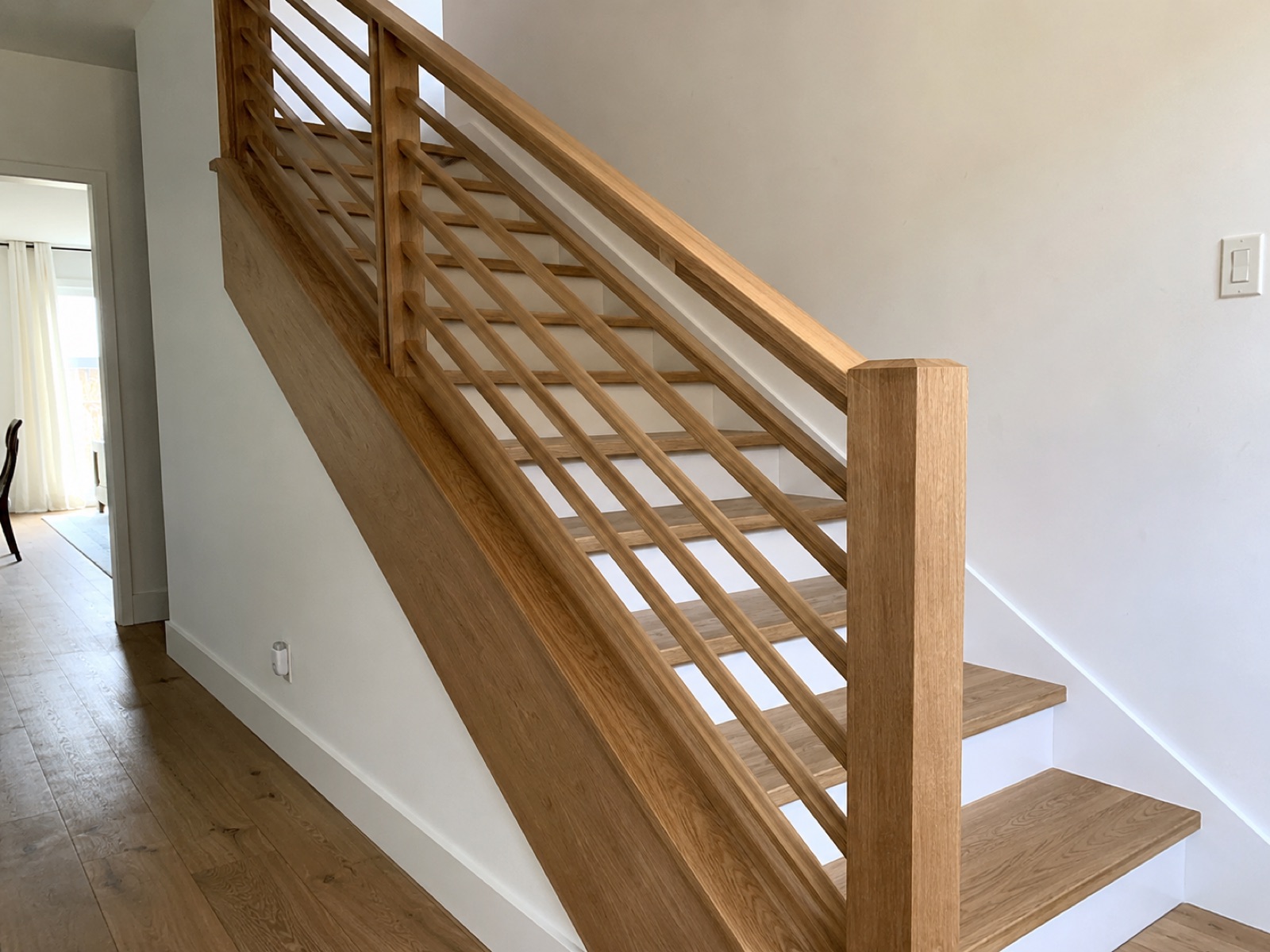
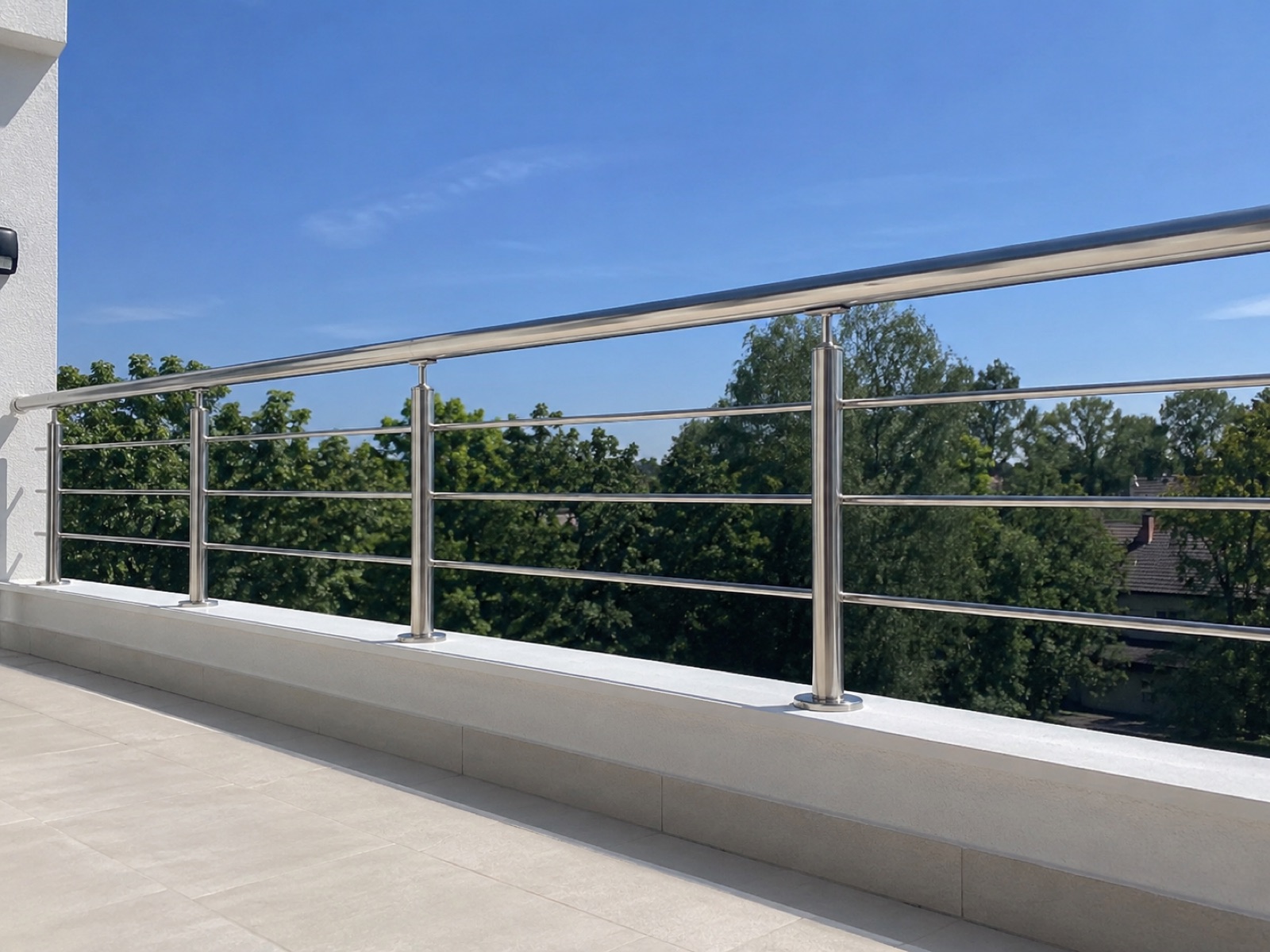
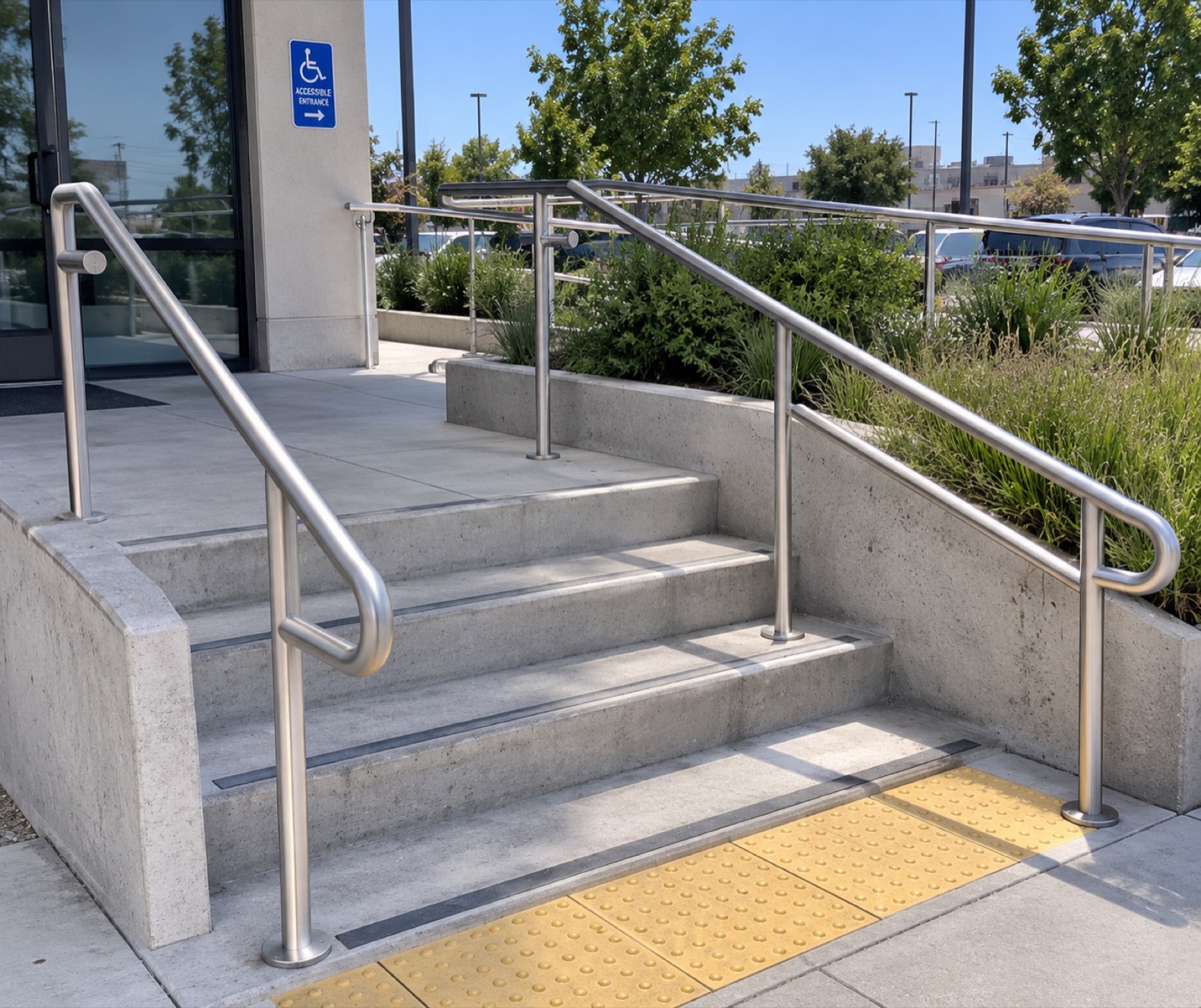
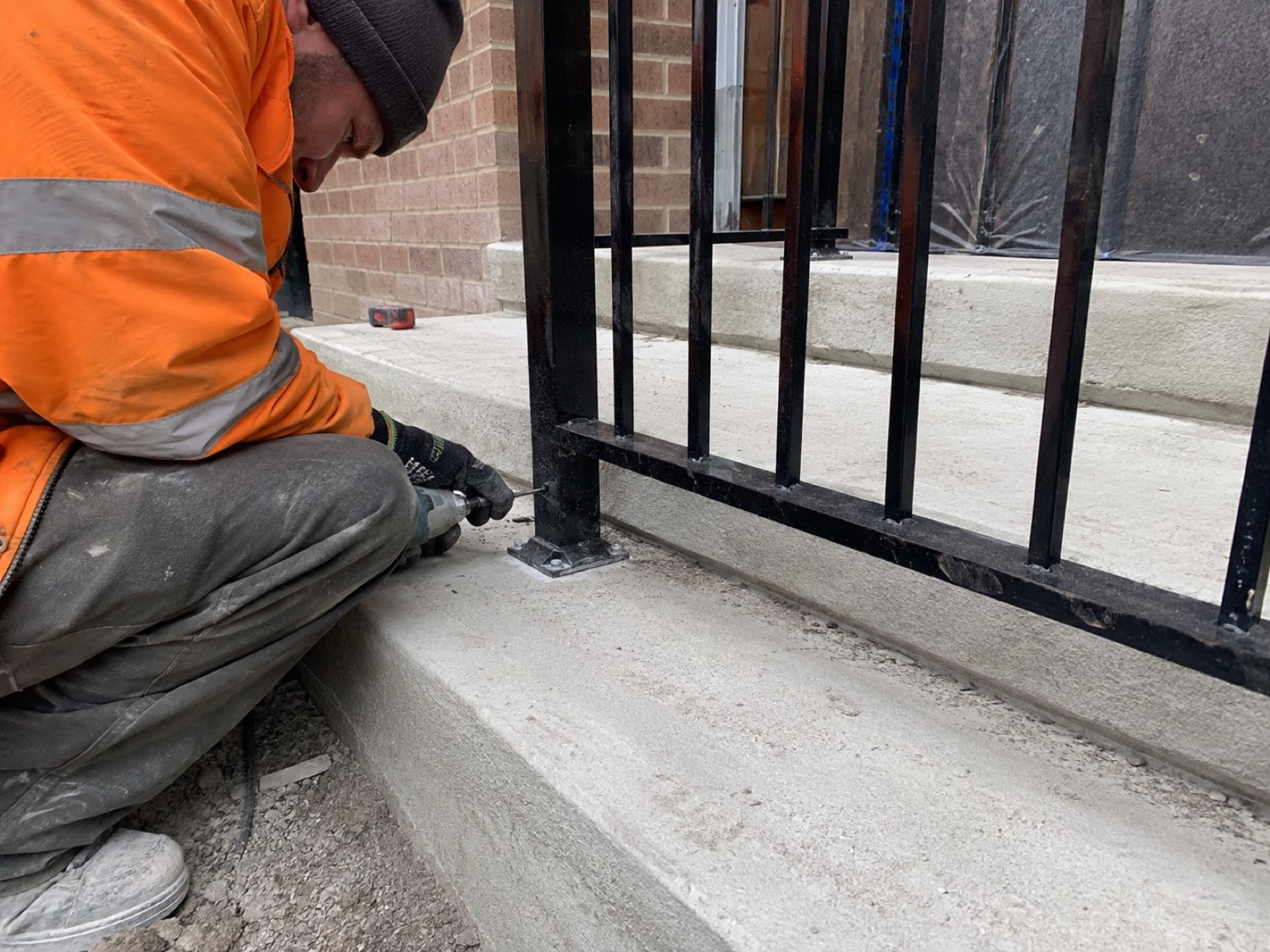
Residential Railings for East Bay Homes
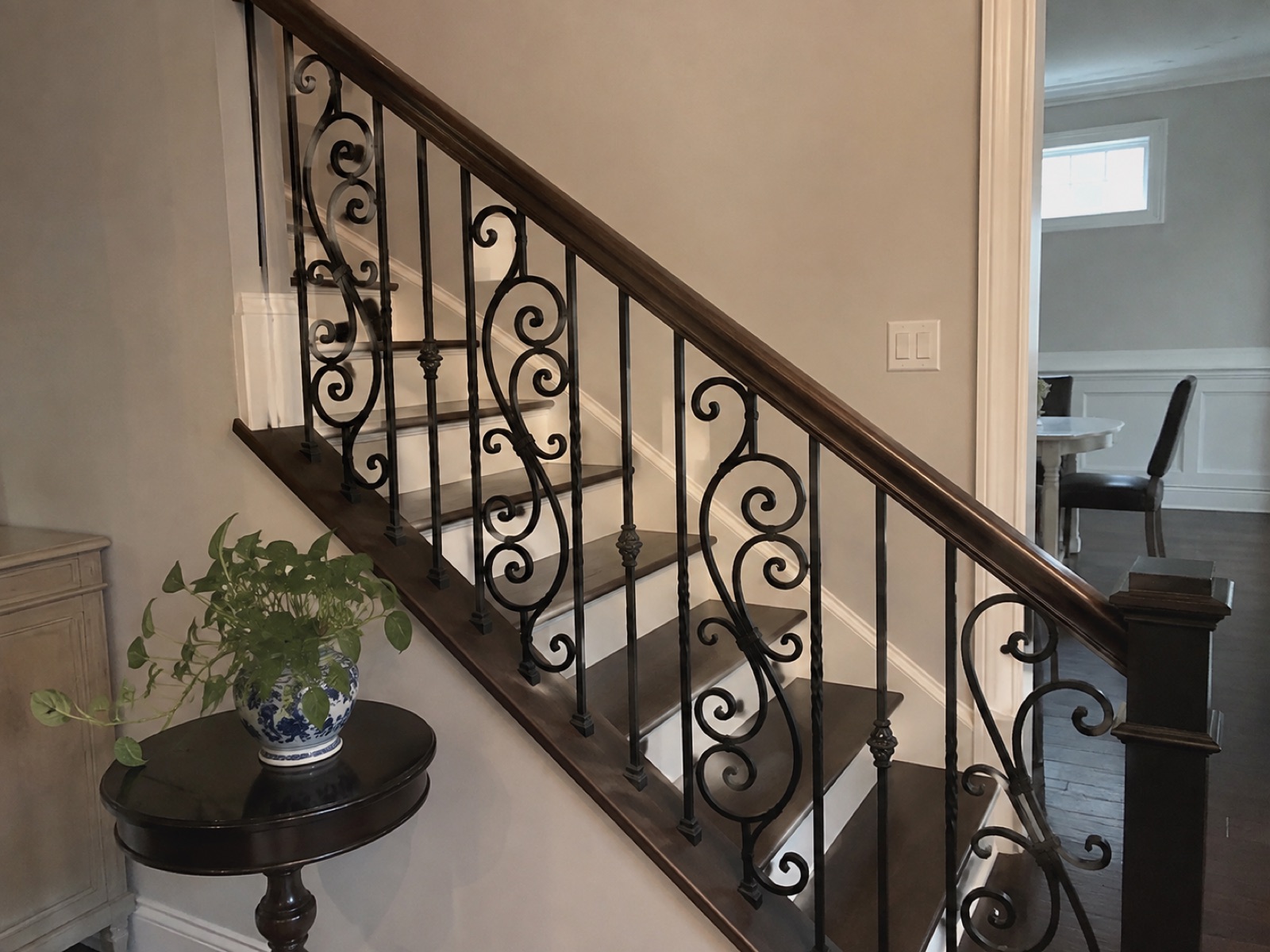
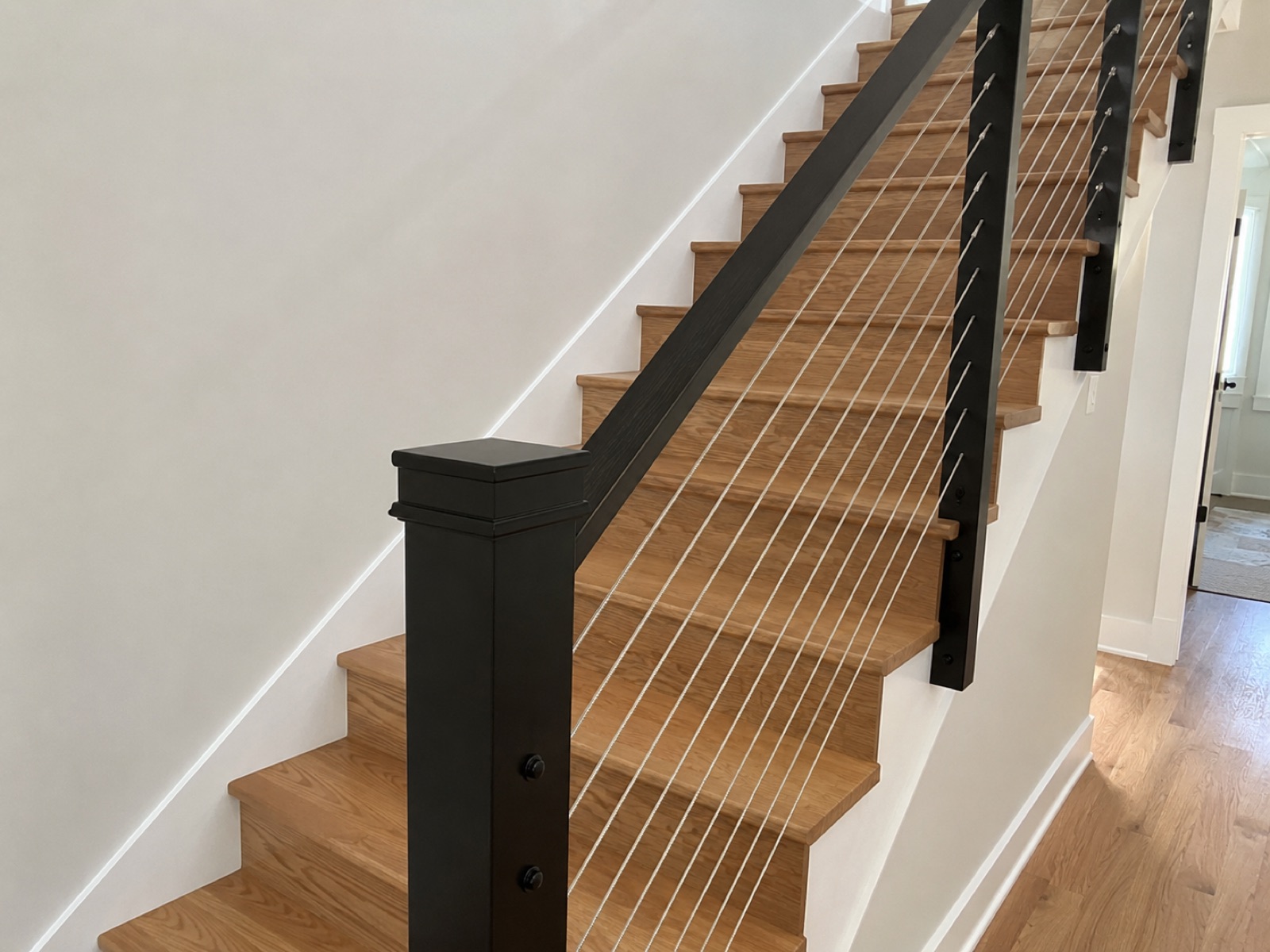
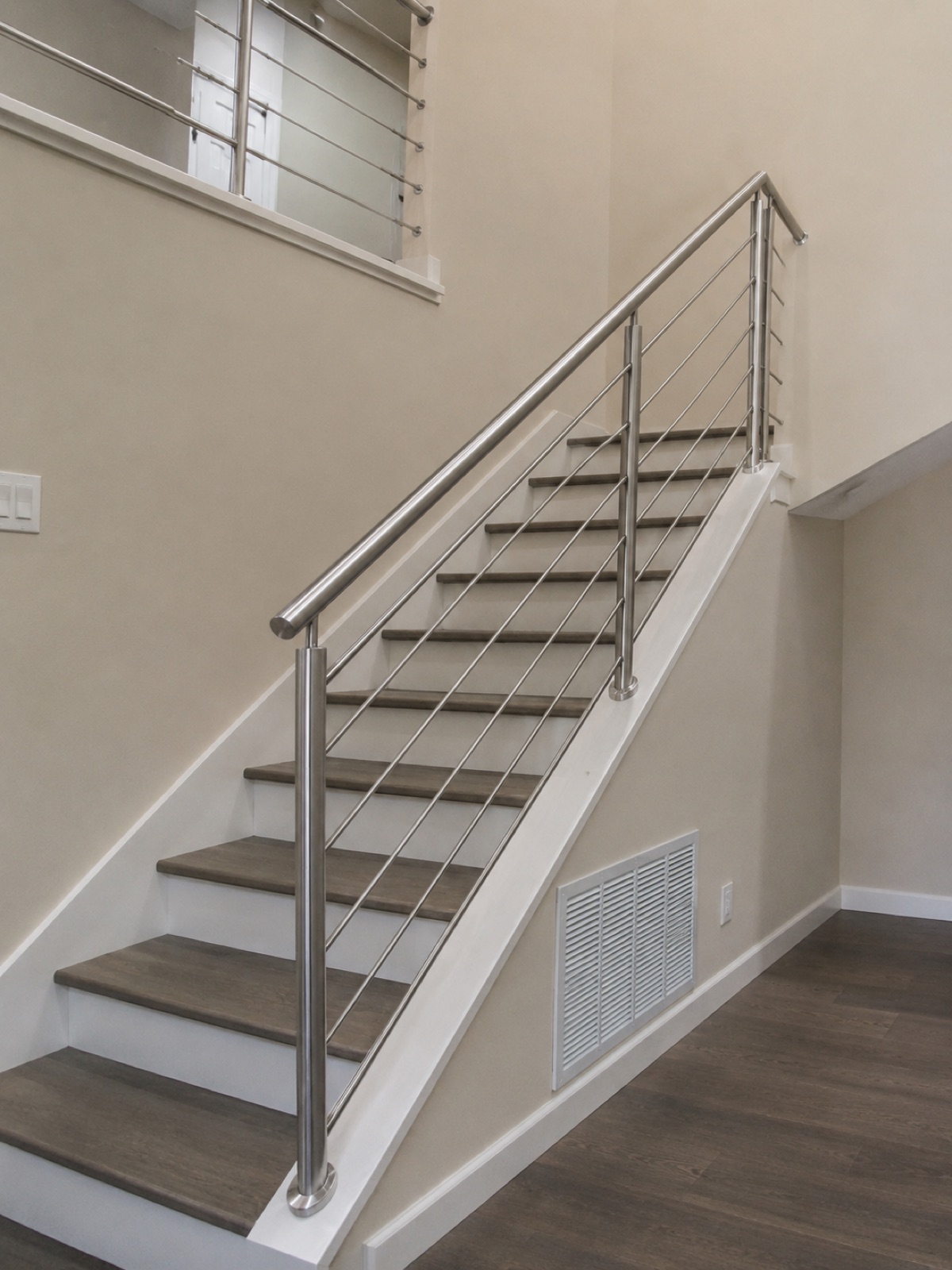
Most of our home projects fall into three buckets: interior stair railings, deck and balcony guardrails, and open-view systems in cable or glass. Inside the house, we build interior stair railings and continuous, graspable handrails that meet the 34-to-38-inch handrail height off the nosing while matching the character of the home, whether that is a hand-forged iron balustrade for an Alameda Victorian or a clean steel-and-wood run for a remodel. On decks and balconies, we build guardrails wherever the walking surface sits more than 30 inches above grade, at the required 42-inch height, with baluster or cable spacing tight enough to reject a 4-inch sphere.
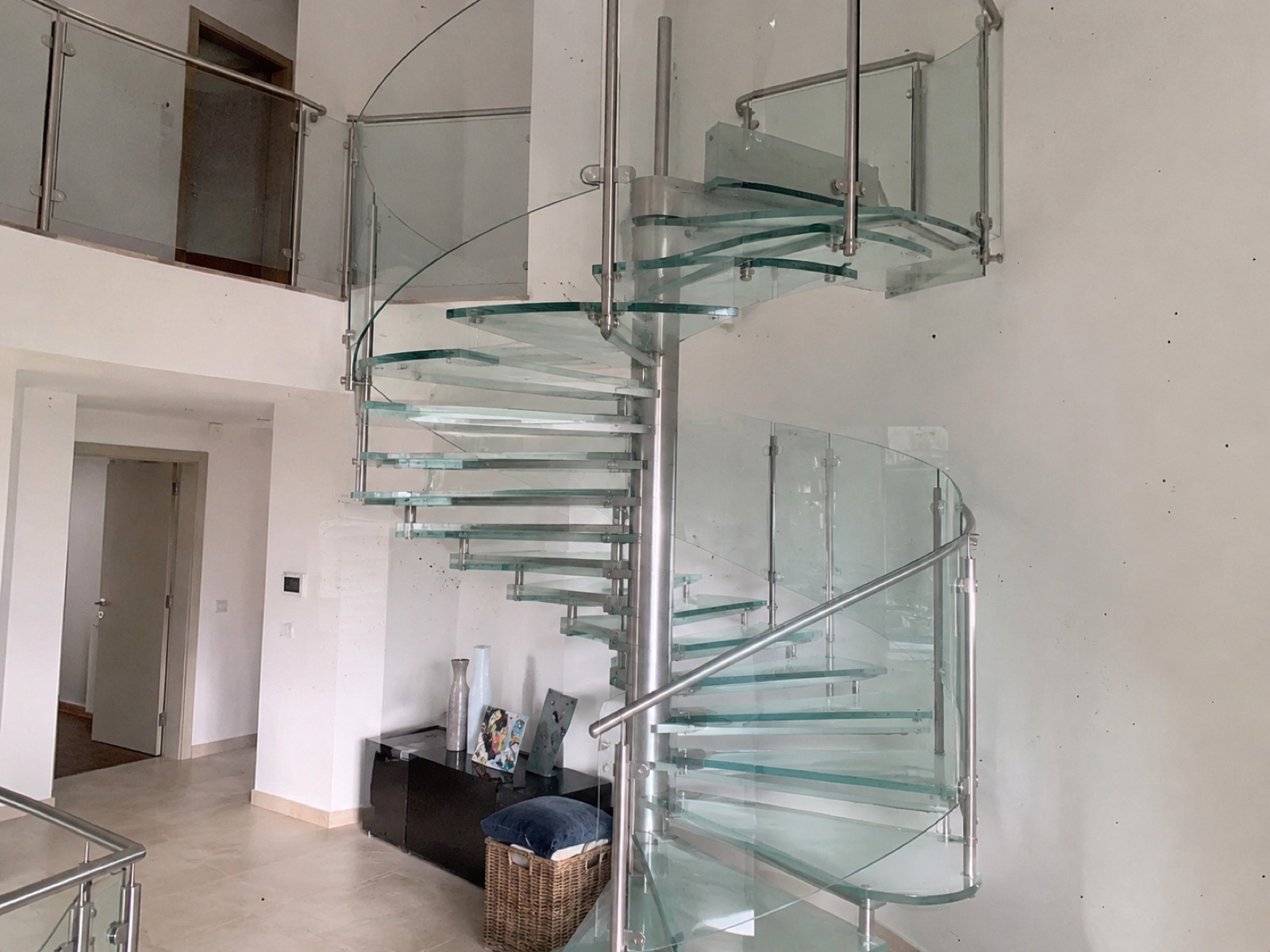
The East Bay housing stock shapes a lot of these decisions. Alameda and Oakland are full of intact Victorian and Edwardian homes where a period-appropriate wrought-iron rail is the right call, and the Berkeley and Castro Valley hills are full of elevated decks on sloped lots where homeowners want to keep the Bay or canyon view. For those, horizontal stainless cable or frameless glass opens the sightline while still meeting code. We build all of it in 316 stainless where salt air is a factor, and we anchor to framing that can actually carry the 20-pound-per-linear-foot guard load and the 200-pound concentrated load a handrail has to resist. Older homes bring their own quirks, out-of-plumb walls, undersized framing, and tread triangles that need the 6-inch spacing exception, and because we fabricate to your exact measurements we handle those in the shop rather than forcing a stock panel to fit. Explore deck & balcony railings, interior stair railings, cable railings, and glass railings to see what fits your home.
Commercial & Multifamily Railings
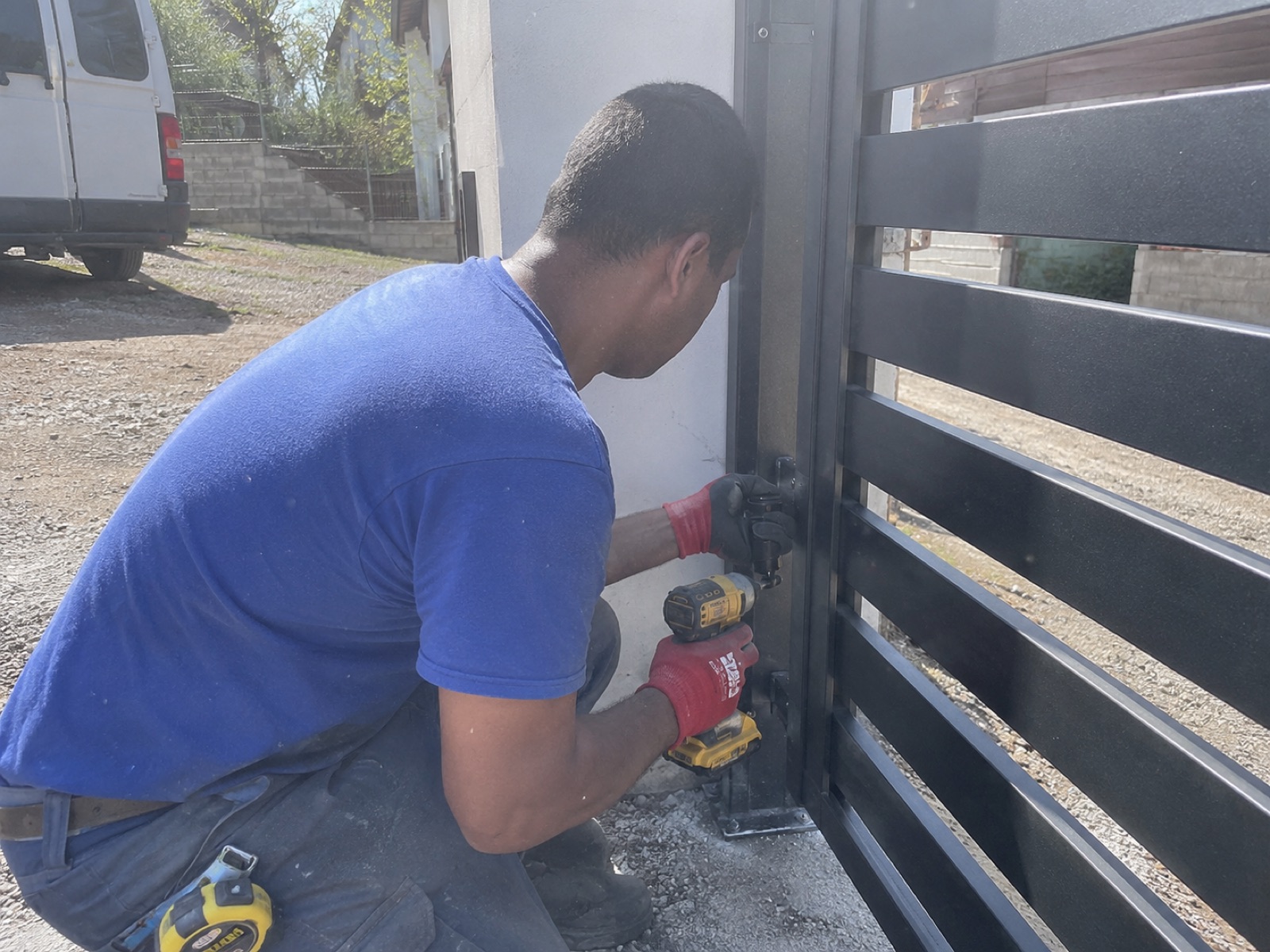
On the commercial side we fabricate ADA-compliant handrails, code guardrails, and multifamily balcony railings for property owners, contractors, and building managers across Alameda County. ADA and commercial handrails follow tighter rules than residential: a Type I graspable profile of 1¼ to 2 inches in diameter, mounted 34 to 38 inches high with at least 1½ inches of wall clearance, and continuous with extensions of 12 inches or more past the top riser. Guardrails resist the required 20-pound-per-linear-foot top-rail load, and every run is drawn and reviewed before we cut steel so it passes inspection the first time. We coordinate around occupied buildings, phase work by stairwell or balcony stack when needed, and stage fabrication in the shop so on-site time and tenant disruption stay short.
The biggest driver right now is SB 721, California's balcony law. Rental buildings with three or more units must have their exterior elevated elements, including decks, balconies, landings, stairways, walkways, and the guardrails and handrails more than six feet above grade, inspected by a licensed professional, and the first deadline of January 1, 2026 has just passed. Failed inspections frequently call for guardrail or handrail replacement or reinforcement, and that is exactly what we build. If you own or manage multifamily property, our railing repair & SB 721 and ADA & commercial handrail services get you back into compliance. Call (510) 390-9618 to talk through a building.
How Custom Railing Works
1. On-Site Consult & Measure
We come to you for a free estimate, measure every run and stair, check heights and drops, and talk through materials, finishes, and budget ranges.
2. CAD & Shop Drawings
We turn the measurements into CAD and shop drawings so you can see exact post spacing, infill, and connections before anything is built.
3. Engineering & Code Review
We check the design against California Building or Residential Code, guard load, and your local East Bay department's requirements, adjusting spacing and anchoring as needed.
4. Shop Fabrication & Welding
Your railing is cut, welded, and assembled in our shop by hand, so the fit-up is tight and the joints are clean.
5. Finishing
We apply the right corrosion protection for the location: powder coat over zinc primer, hot-dip galvanizing, or marine-grade stainless left bare.
6. Installation & Anchoring
We install on site and anchor posts and base plates into solid framing or concrete so the railing carries its loads and shrugs off seismic movement.
7. Final Code & Safety Inspection
We confirm heights, spacing, and continuity, and support you through the permit department's final inspection so everything signs off.
Popular Railing Styles in the East Bay
Certain looks come up again and again in this market. Here are the ones we build most, and where they fit best.
- Horizontal stainless cable on modern hill decks. Rockridge, Montclair, and the Berkeley and Castro Valley hills are full of elevated decks chasing a view. Thin 1x19 stainless aircraft cable with posts about four feet apart and cable spacing near three inches keeps the sightline open while staying within the 4-inch-sphere rule.
- Period-appropriate wrought iron for Alameda Victorians. Alameda's Gold Coast and East End and Oakland's Victorian flats call for hand-forged ornamental iron: scrollwork, historically sympathetic pickets, and profiles that suit a home built under the California Historical Building Code.
- Frameless glass for Bay views. Where nothing should interrupt the water or skyline, tempered or laminated glass on stainless standoffs, spigots, or a base shoe gives a nearly invisible guard that still meets the 42-inch height. Laminated glass adds an extra safety and sound layer for high or exposed decks.
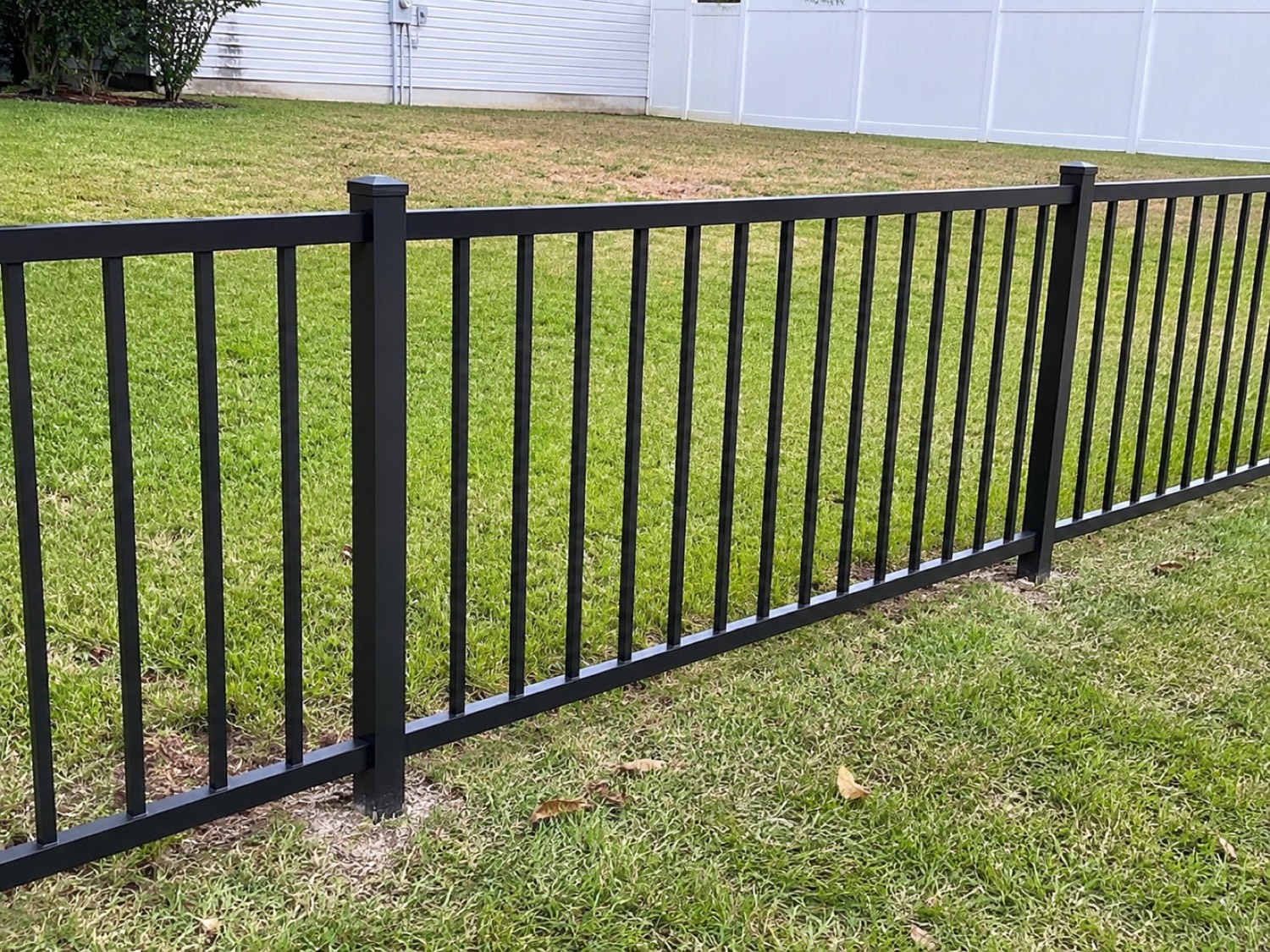
- Powder-coated aluminum for coastal low-maintenance. For homeowners who want set-it-and-forget-it near the water, powder-coated aluminum resists rust, wipes clean, and comes in any color without the upkeep of raw steel. It is a favorite on San Leandro and Castro Valley decks where owners want a clean look with minimal maintenance.
What Custom Railing Costs in the Bay Area
Every railing is priced by its actual runs, corners, stairs, and access, so treat these as honest 2026 ranges, not quotes. Bay Area labor and 316 stainless push projects toward the high end.
| Railing type | Installed per linear foot | Typical project |
|---|---|---|
| Wrought iron / ornamental | $65–$135 (hand-forged $300–$900) | ~$700–$6,000 |
| Aluminum (powder-coated) | $50–$200 | ~$400–$4,800 |
| Cable railing | $75–$260 | ~$3,750–$13,000 |
| Glass railing | $150–$600 | Premium tier |
| Interior stair railing | $40–$100 | ~$900–$2,500 (~25 ft) |
| Exterior deck railing | $20–$600 | ~$400–$4,800 |
Other factors move the number: permits typically run $50–$500, corners and turns add roughly 20–30% for the extra posts and fit-up, staircases cost more than straight level runs, and choosing 316 stainless or hand-forged iron lands you at the top of the range. That is why we never quote sight-unseen. Book a free on-site estimate and we will measure and give you a real range. Call (510) 390-9618.
Iron vs. Aluminum vs. Cable vs. Glass
| Material | Look | Maintenance | Corrosion resistance (coastal) | Cost tier | Best for |
|---|---|---|---|---|---|
| Wrought iron | Traditional, ornamental, solid | Moderate; touch up finish, watch for rust | Good when powder-coated or galvanized; needs upkeep near salt | $$–$$$$ | Victorians, historic homes, formal entries and stairs |
| Powder-coated aluminum | Clean, modern, any color | Low; wipe clean | Excellent; will not rust | $–$$$ | Coastal low-maintenance decks and balconies |
| Stainless cable | Minimal, open, horizontal lines | Low; occasional tension check and wipe-down | Excellent in 316 marine grade | $$$–$$$$ | Hill decks and modern homes that want the view |
| Tempered glass | Nearly invisible, premium | Low-moderate; clean the glass | Excellent with stainless hardware | $$$$ | Unobstructed Bay and skyline views |
Serving Alameda & the East Bay
Alameda Custom Railing is rooted in Alameda, an island city just off Oakland's shoreline that sits close to sea level and takes salt air from every direction, plus Bay Farm Island across the estuary. That marine setting is the reason we lead with corrosion-resistant materials on nearly every project here. Alameda's neighborhoods, from the Gold Coast and East End to the West End, Marina Village, and Alameda Point, hold one of the best-preserved collections of Victorian and Edwardian homes in the Bay Area, and local landmarks like the USS Hornet museum and the restored Alameda Theatre reflect that historic character. Period-appropriate iron restoration is a specialty of ours here, alongside modern cable and glass for waterfront remodels.
Beyond the island, we cover the East Bay's distinct communities and their local permit departments. We serve Alameda, Oakland, Berkeley, San Leandro, Hayward, and Castro Valley. Each city page covers the housing stock, the code and permit specifics, and the railing work that comes up most in that community, from Oakland Craftsman bungalows on the Hayward Fault to Hayward's soft-story retrofit blocks and Castro Valley's county-permitted hillside decks.
Get a Free On-Site Estimate
Whether you need a single interior stair rail, a full deck guardrail that keeps your view, or SB 721 repairs across a multifamily building, we would like to see the project and give you an honest range. Every estimate is free and on site, with no pressure and no obligation. Call Alameda Custom Railing at (510) 390-9618 or request your free on-site estimate today, and we will build you a railing that suits your home and survives the Bay.
Questions, Answered
How much does custom railing cost per linear foot in the East Bay?
As honest 2026 ranges: wrought iron runs about $65–$135 per linear foot (hand-forged $300–$900), powder-coated aluminum about $50–$200, stainless cable about $75–$260, and glass about $150–$600. Bay Area labor and marine-grade materials push projects toward the high end. Because runs, corners, stairs, and access all change the number, we give real figures only after a free on-site estimate.
Do you sell pre-made or stock railings I can buy off the shelf?
No. Alameda Custom Railing is a custom fabricator and installer, not a railing store. We design, build, and install every railing to your exact measurements and to California code, so there is nothing pre-made to pick up and take home. Tell us about your stairs, deck, or balcony and we will build a railing that fits your space. Call (510) 390-9618 for a free on-site estimate.
Which railing materials hold up best in Alameda's salt air?
Near the water we spec 316 marine-grade stainless for cable and hardware, powder coat over zinc primer for steel and iron, and hot-dip galvanizing where a part is exposed or embedded. Powder-coated aluminum is also excellent because it simply will not rust. The wrong metal or a thin finish corrodes fast on an island, so material choice is the first thing we discuss.
How tall does a railing have to be, and how wide can the gaps be?
Under the California Building and Residential Codes, a guard is required where the walking surface is more than 30 inches above grade, and guard height is 42 inches (enforced across Alameda, Oakland, and Berkeley). Openings must not pass a 4-inch sphere, loosening to 6 inches at the triangular opening beside a stair tread. We confirm the exact requirement with your local department.
Does cable railing sag, and can it pass the 4-inch rule?
Cable stays taut and code-compliant when it is engineered correctly. We set posts about four feet apart to limit deflection, tension the 1x19 stainless aircraft cable properly, and space the runs near three inches so the assembly rejects a 4-inch sphere. Under-built cable jobs with posts too far apart are what sag and fail inspection, which is why we drive the layout off the code.
Do I need a permit for a new railing or deck rail?
Often yes, especially for exterior guardrails, decks more than 30 inches above grade, or attached structures. Permit rules and fees vary by city, and unincorporated Castro Valley goes through Alameda County rather than a city. Permits typically run $50–$500. We tell you what your project needs and support you through the final inspection.
How long does a custom railing project take?
Timing depends on the material, the size of the run, finishing, and any engineering or permit review. Because everything is fabricated in our shop and then finished and installed, we give you a realistic schedule as part of your on-site estimate rather than a one-size-fits-all promise. Call (510) 390-9618 and we will walk through the steps for your specific project.
Cable, glass, or iron: which should I choose?
It comes down to look, view, and setting. Iron suits traditional and historic homes and offers the widest ornamental range. Cable gives a minimal, open look that is ideal for hill decks that want to keep the view. Glass is the most transparent and premium option for uninterrupted Bay views. Aluminum is the low-maintenance coastal pick. We help you weigh style, upkeep, and budget during the estimate.
How do you weatherproof and finish railings?
We match the finish to the exposure. Powder coating is an electrostatic, oven-cured coating that resists chipping and fading; hot-dip galvanizing gives heavy sacrificial protection for the harshest spots; and a zinc primer underneath adds another corrosion barrier. For cable and hardware we use 316 marine-grade stainless. On an island, this layered approach is what makes a railing last.
Can you add a railing to my existing deck or stairs?
Yes. We regularly retrofit railings onto existing decks, balconies, and staircases. The key is anchoring: we verify the framing or concrete can carry the required 20-pound-per-linear-foot guard load and the 200-pound concentrated handrail load, and we reinforce the connection if needed so the new railing is solid and code-compliant.
What is SB 721 and can you handle the repairs?
SB 721, the Balcony Bill, requires rental buildings with three or more units to have exterior elevated elements, including balconies, landings, stairways, walkways, and guardrails and handrails more than six feet above grade, inspected by a licensed professional. The first deadline was January 1, 2026, and it recurs every six years. Failed inspections often require guardrail or handrail replacement or reinforcement, which we fabricate and install. SB 326 is the 9-year HOA and condo equivalent.
Do you warranty your railings?
We are licensed and insured and stand behind our fabrication and installation craftsmanship. Because material, finish, and site conditions vary, we go over exactly what is covered as part of your written estimate so there are no surprises. Call (510) 390-9618 to discuss the specifics for your project.
What areas do you serve?
We serve Alameda and the wider East Bay, including Oakland, Berkeley, San Leandro, Hayward, and Castro Valley, across Alameda County. We know the local permit centers and housing stock in each community, so we arrive already understanding your project and its code requirements.
How does the custom design process work?
It starts with a free on-site consult where we measure and talk through options. We then produce CAD and shop drawings so you can approve the exact layout, run an engineering and code review, fabricate and weld in our shop, apply the right finish, and install with proper anchoring, ending with the department's final inspection. You see the design before we cut any steel.
Ready to get started?
Alameda Custom Railing provides fast, same-day custom railing across Alameda, CA and the surrounding area — flat-rate pricing, licensed and insured, with 24/7 emergency service. Call now, request a free estimate.