
Deck & Balcony Railings in Alameda, CA
Custom-fabricated exterior deck and balcony guards built to code, engineered for hill-lot elevation, and finished to survive Bay Area salt air. Free on-site estimates.
Deck & balcony railings built for real East Bay decks
A deck railing is the one part of your outdoor structure that has to hold a person up. When guests lean against it, when a child pushes off it, when winter storms hammer it for years, it has to stay put. As a locally owned, licensed and insured custom shop, Alameda Custom Railing fabricates deck and balcony guards engineered for the way East Bay homes are built: elevated decks on sloped hill lots, second-story balconies over sea-level lots, and multifamily landings that now fall under state inspection law.
We fabricate in our own shop, so your railing is cut, welded, and finished to your exact deck dimensions instead of assembled from kit parts that never quite fit. Whether you want the near-invisible sightlines of stainless cable, low-maintenance powder-coated aluminum, the clean look of glass, or the strength of ornamental iron, we build it to survive our coast and pass inspection. Call (510) 390-9618 for a free on-site measure and quote.
Licensed & Insured Custom In-Shop Fabrication Free On-Site EstimatesWhat it is and who it's for
Deck and balcony railings are a type of exterior guardrail required wherever a walking surface sits more than 30 inches above grade.
A deck or balcony railing is the guard that protects any elevated walking surface from a fall. Under the California Building Code, a guard is required wherever a walking surface sits more than 30 inches above the grade or floor below. That 30-inch trigger is why so many East Bay decks need one: on a hillside lot in the Berkeley Hills, the Oakland hills, or Castro Valley's sloped canyons, a deck that looks one story up can sit well over 30 inches off the downhill grade.
This service is for homeowners replacing an aging or wobbly deck rail, contractors finishing a new deck or addition, and rental owners bringing balcony guards up to current code. If your building is a rental with three or more units, your balcony and deck guards may also fall under California's SB 721 balcony inspection law — see our Railing Repair & SB 721 page for the details.
Materials & specs
Every material we offer for exterior work is chosen to hold up to weather. The right pick depends on your view, your budget, and how close you are to the water.
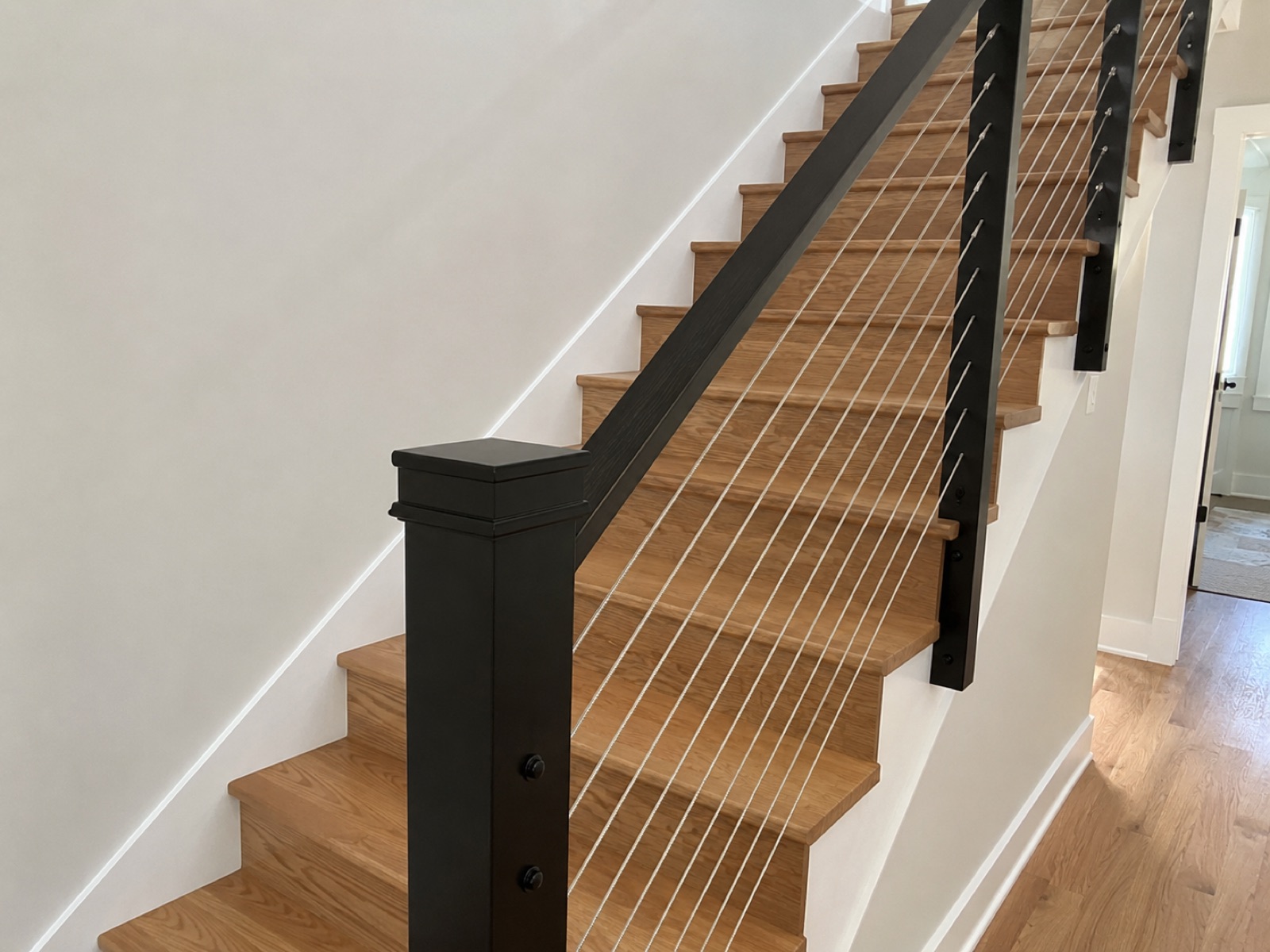
Stainless cable
1/8" to 3/16" 316 marine-grade stainless aircraft cable (1x19) tensioned between posts about 4 ft apart, spacing held near 3" for the 4" rule. Nearly invisible — ideal for a hill or Bay view.
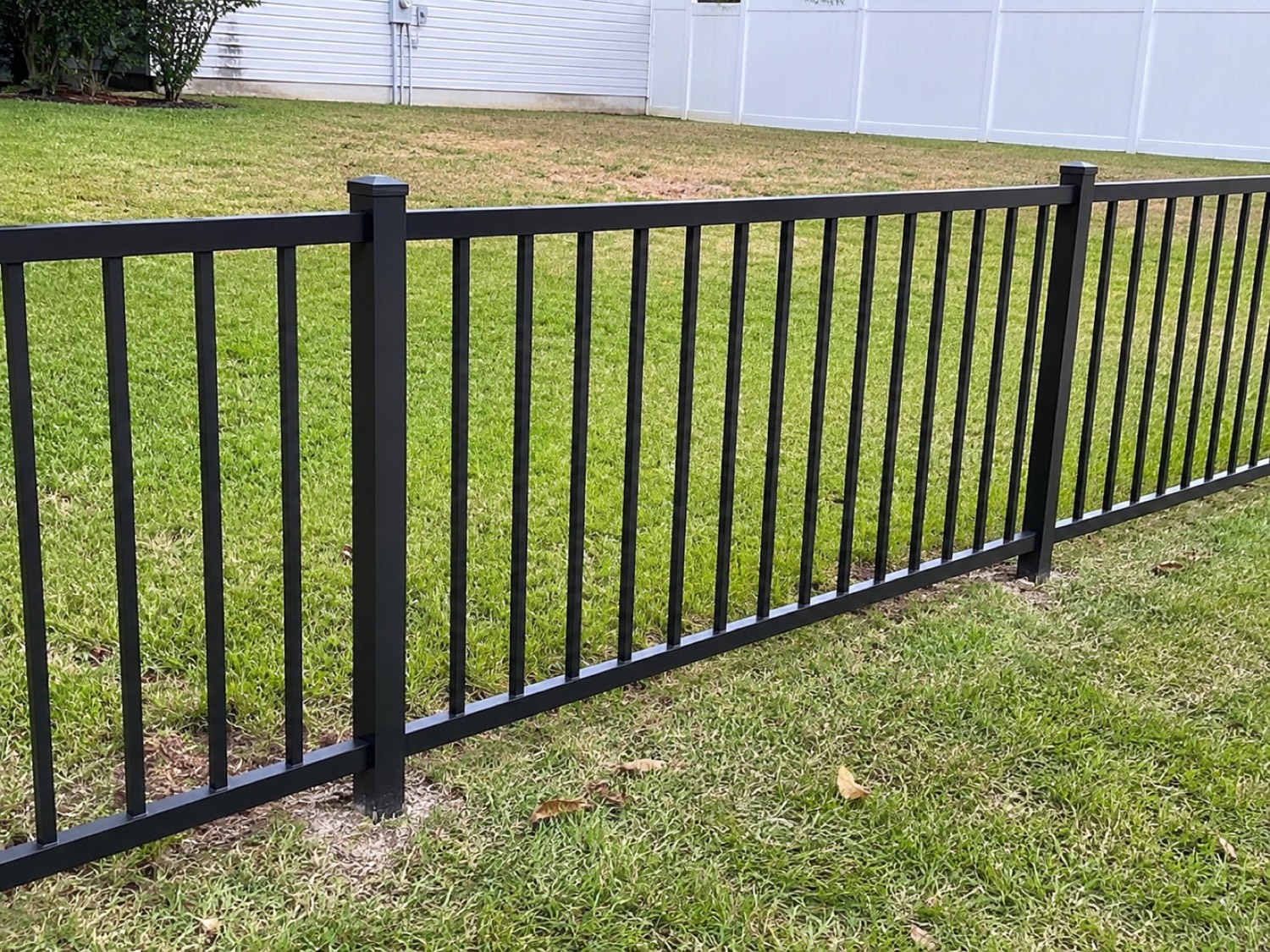
Powder-coated aluminum
Rustproof, lightweight, low-maintenance. An electrostatic, oven-cured powder coat in your color. A practical, mid-cost workhorse for East Bay decks.
Tempered / laminated glass
Framed panels, standoffs, or base-shoe channel for an unobstructed view and a wind screen. A premium look for modern hillside decks.
Ornamental iron
Hand-forged and welded mild carbon steel, hot-dip galvanized and powder-coated for exterior duty. Strong and period-correct for Victorian and Craftsman homes.
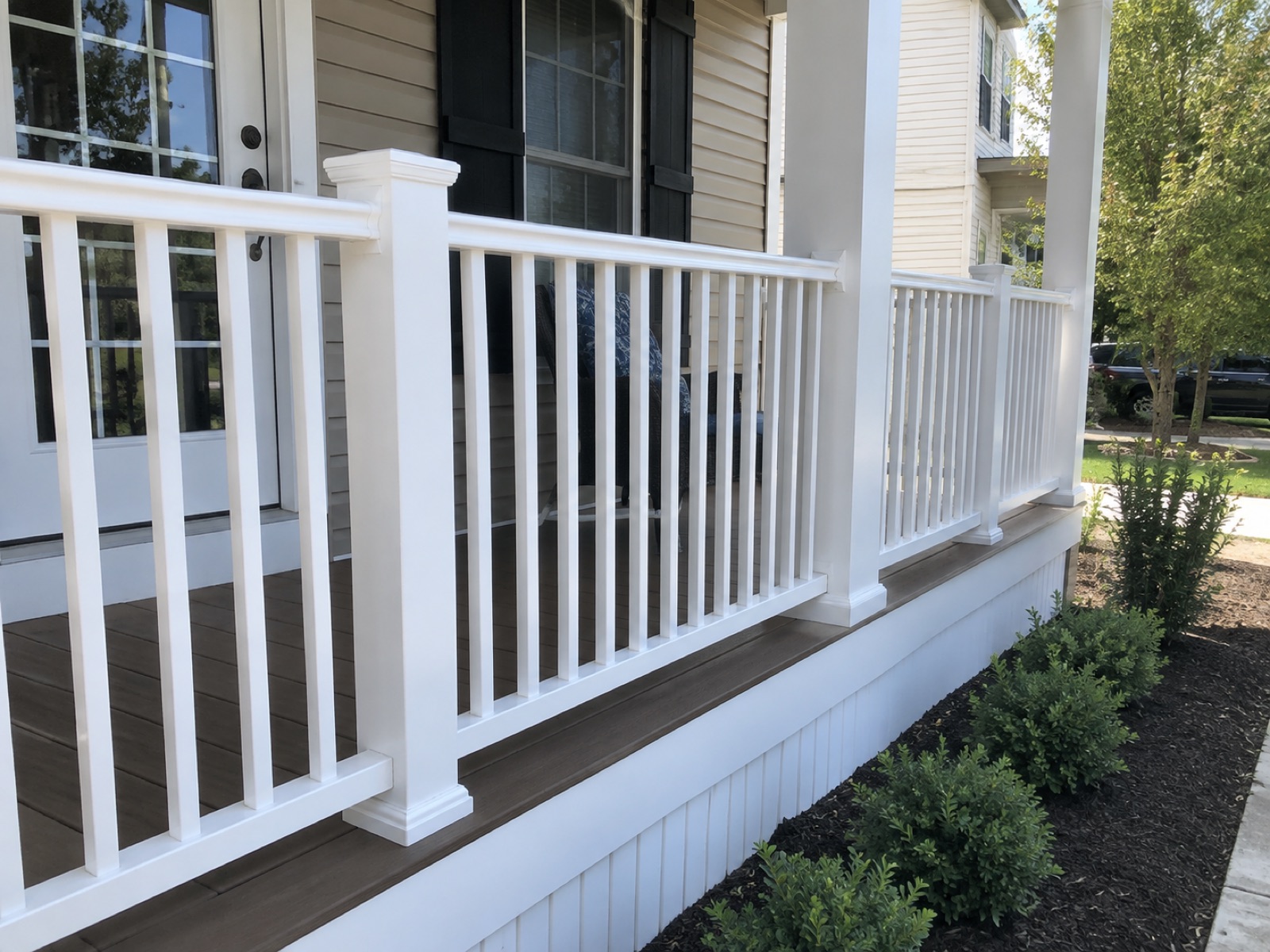
Code compliance for deck & balcony guards
Deck and balcony guards in California are governed by the California Building Code (CBC) and Residential Code (CRC). The specifics your local building department enforces:
- Guard required: any walking surface more than 30 inches above the grade or floor below.
- Guard height: 42 inches minimum — the standard enforced across Alameda, Oakland, and Berkeley building departments.
- 4-inch sphere rule: openings and baluster or cable gaps must not allow a 4" sphere to pass through.
- Load: the top rail must resist a lateral load of 20 lb per linear foot, plus a 200-lb concentrated load.
- Permits: most East Bay departments require a permit for a new deck or an attached guard — Berkeley, for example, requires one for decks over 30" or attached to the house.
Code adoption and amendments vary by city, so always confirm the current requirement with your local building department. We handle the code review and inspection coordination as part of the job.
Our process
On-site consult & measure
We come to your deck, measure the runs and elevations, check your grade drop, and talk through material and view priorities.
CAD & shop drawings
We produce shop drawings so post spacing, heights, and gaps are dialed in for both looks and code.
Engineering & code review
We verify guard height, the 4" sphere spacing, and load requirements against your city's adopted code before anything is cut.
Shop fabrication & welding
Your railing is cut, welded, and assembled in our shop to your exact measurements.
Finishing
Powder coat, hot-dip galvanizing, and 316 stainless hardware chosen for your exposure to salt air.
Installation, anchoring & inspection
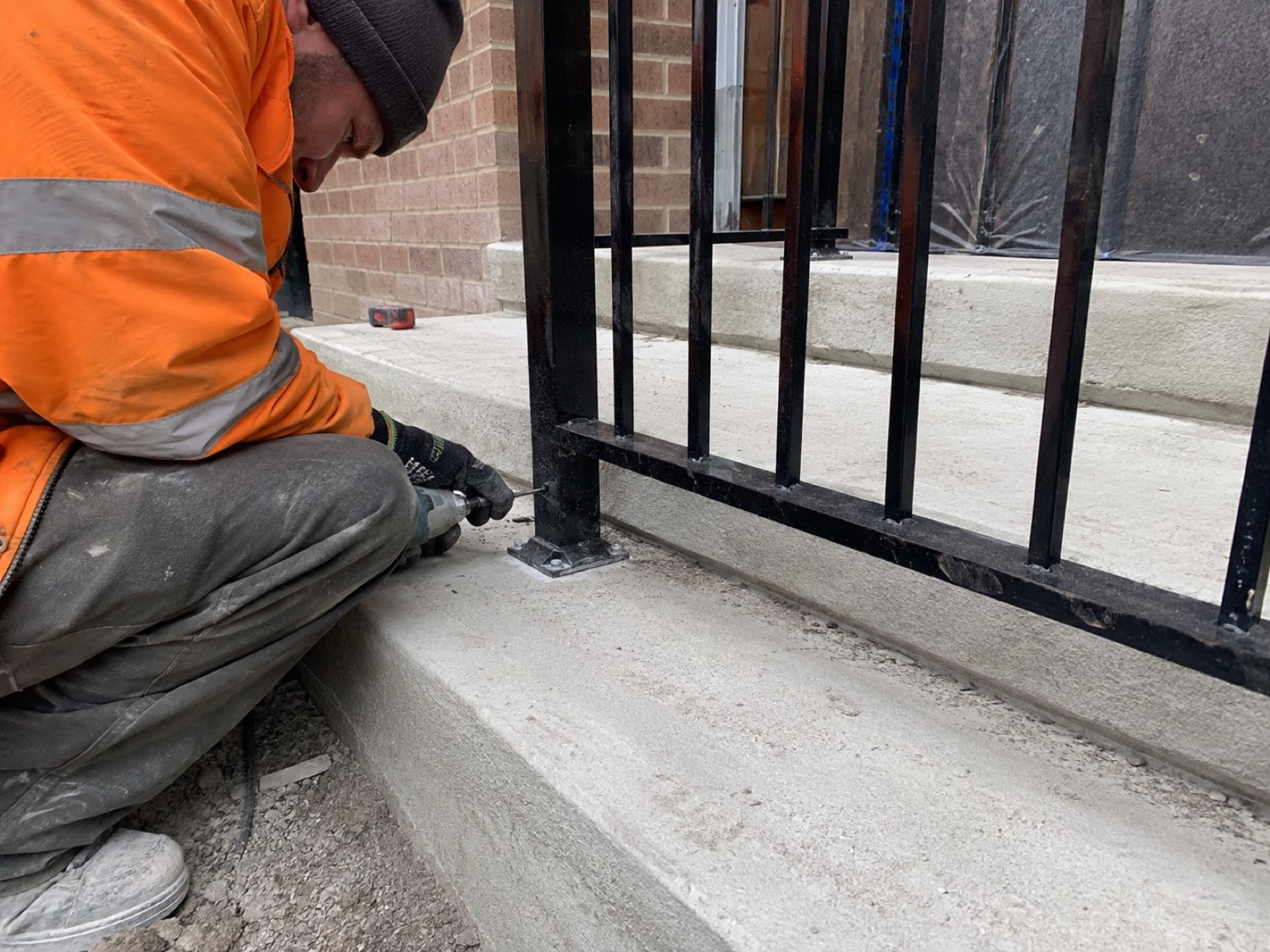
We anchor to solid framing with corrosion-resistant fasteners and coordinate the final code inspection.
Built for the East Bay
Two local conditions dictate how we build a deck rail here, and off-the-shelf products ignore both. The first is salt air. Alameda is an island near sea level, and coastal humidity carries chloride that eats ordinary steel and rusts cheap fasteners. That is why we specify 316 marine-grade stainless cable and hardware, oven-cured powder coat, and hot-dip galvanizing on iron — the strategy that keeps a railing looking good a decade out instead of streaking rust after two winters.
The second is seismic ground motion. The Hayward Fault runs directly through Oakland, Berkeley, San Leandro, and downtown Hayward, and a deck guard is only as strong as what it is bolted to. We anchor posts into solid framing with properly sized, corrosion-resistant fasteners so the rail stays rigid through the shaking. On the elevated hillside decks common in the Berkeley and Oakland hills and Castro Valley, that anchoring detail is the difference between a guard that holds and one that loosens over time.
Honest price ranges
Exterior deck railing is one of the widest ranges we quote, because "deck railing" covers everything from a short aluminum run to a long glass-and-cable view deck. Bay Area labor and 316 stainless push local projects toward the higher end.
| Type | Installed per linear foot | Typical project |
|---|---|---|
| Exterior deck railing (general) | $20–$600 | ~$400–$4,800 |
| Powder-coated aluminum | $50–$200 | ~$400–$4,800 |
| Cable railing | $75–$260 | ~$3,750–$13,000 (avg ~$9k / 50 ft) |
| Glass railing | $150–$600 | premium tier |
Permits typically run about $50–$500, and corners or turns add roughly 20–30% each. These are honest ranges, not quotes — the only accurate number comes from a free on-site estimate. Call (510) 390-9618.
Available across the East Bay
We fabricate and install deck and balcony railings throughout Alameda County and the East Bay, tailoring each build to the neighborhood. That means near-sea-level corrosion protection in Alameda, hill-lot elevated decks in the Oakland and Berkeley hills, practical deck replacement in San Leandro, seismic-anchored guards in Hayward, and sloped-lot hillside decks in Castro Valley. Wherever you are, you get the same in-shop fabrication and code coordination.
Related services
Questions, Answered
When does my deck legally need a railing?
Under the California Building Code, a guard is required wherever a walking surface is more than 30 inches above the grade or floor below. On the sloped hill lots common in the East Bay, a deck that looks low can easily clear that trigger on the downhill side. Confirm the requirement with your local building department; we can check it on a free on-site visit.
How tall does a deck guardrail have to be?
Alameda, Oakland, and Berkeley building departments enforce a 42-inch minimum guard height, and gaps must be tight enough that a 4-inch sphere cannot pass through. Adopted codes and amendments vary by city, so we verify the current standard for your address before fabrication.
Which railing material lasts best near the water?
For coastal and near-sea-level homes like those in Alameda, we specify 316 marine-grade stainless cable and hardware, oven-cured powder-coated aluminum, and hot-dip galvanized iron. These resist the chloride in salt air that rusts ordinary steel and cheap fasteners, and we match the material to how much salt exposure your deck gets.
Do I need a permit for a new deck railing?
Usually, yes. Most East Bay departments require a permit for a new deck or an attached guard — Berkeley, for example, requires one for decks over 30 inches or attached to the house. Permit fees typically run about $50 to $500. We handle the code review and inspection coordination as part of the project.
Does my apartment building's balcony fall under SB 721?
If your building is a rental with three or more units, its wood- or steel-framed balconies, decks, landings, and their guardrails and handrails more than 6 feet above grade are covered by SB 721, and the first inspection deadline passed on January 1, 2026. Failed inspections often require guardrail or handrail replacement. See our Railing Repair & SB 721 page for details.
Ready to get started?
Alameda Custom Railing provides fast, same-day custom railing across Alameda, CA and the surrounding area — flat-rate pricing, licensed and insured, with 24/7 emergency service. Call now, request a free estimate or head back to our homepage.