
7 Signs Your Railing Needs Repair or Replacement
Your railing is life-safety hardware — don't wait
A railing has one job: to stop a fall. When it starts to fail, the warning signs are usually visible long before someone leans on it and finds out the hard way. Because East Bay homes face both salt air and seismic movement, railings here take more abuse than most — and a guard that no longer meets code or no longer holds is not a someday project. This guide covers the seven signs that mean it is time to repair or replace, from the obvious wobble to the code problem hiding in plain sight. If any of these describe your railing, call (510) 390-9618 for a repair estimate.
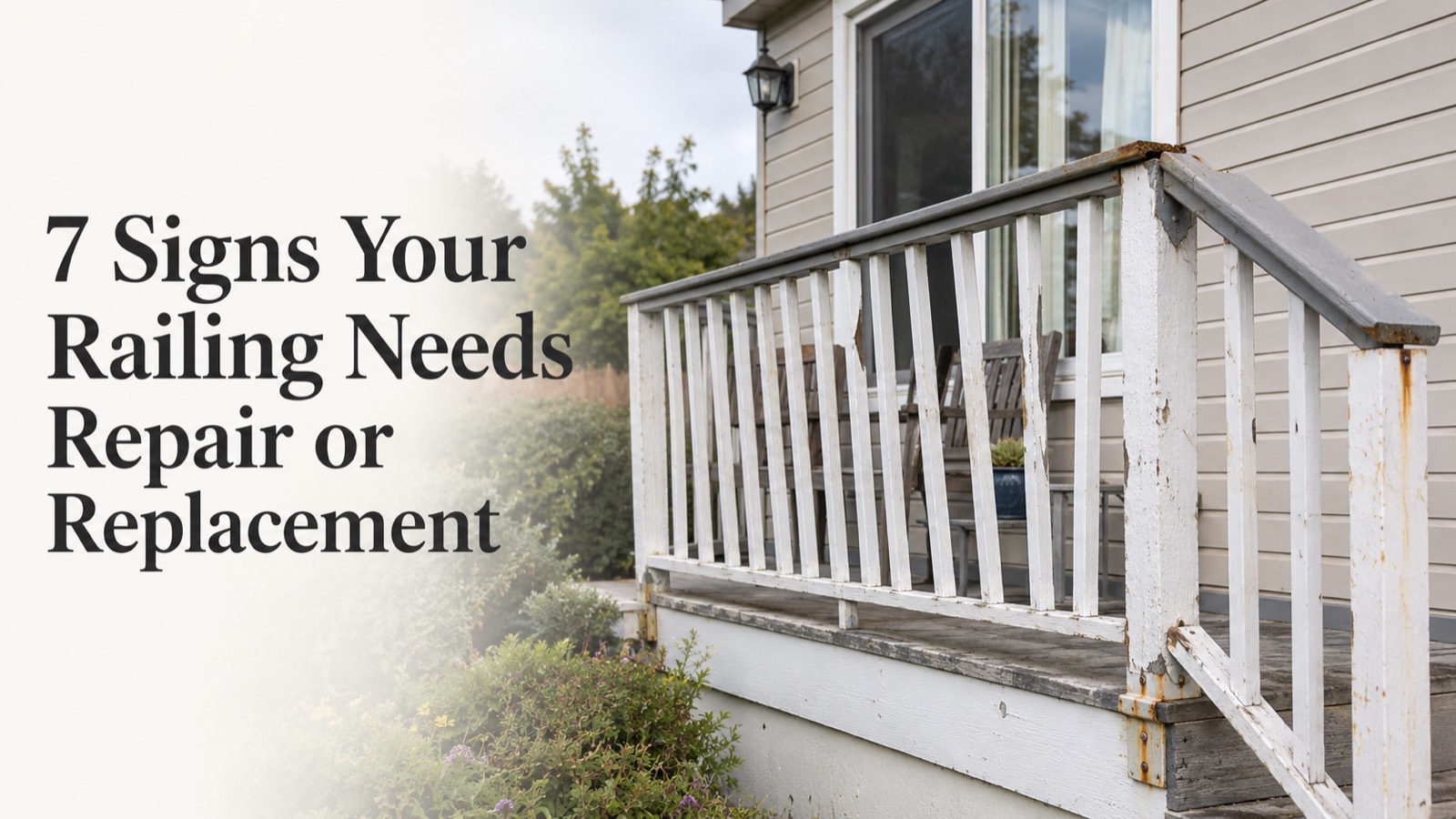
1. Wobbly or loose posts
Grab your guard and push. If a post moves, shifts, or flexes, the anchor connection is failing — and the anchor is the whole point of a guard. Loose posts come from corroded fasteners, cracked welds, water-damaged framing, or anchors that were never adequate. A guard is supposed to resist 20 pounds per linear foot at the top rail; one that wiggles under a hand push will not. This is the most common and most dangerous sign, and it is exactly the kind of failure SB 721 inspectors flag on rental balconies. Do not ignore it. A quick self-check: walk the full run and push at each post and at the mid-span of the top rail, not just at the ends. Movement anywhere means the connection needs attention before the railing is trusted with weight again.
Planning a concrete project in Alameda or the East Bay? Get a free, no-obligation on-site estimate and a written flat-rate price.
2. Rust and corrosion
Surface rust streaks are cosmetic at first, but they are also a countdown. Left alone, rust moves from the surface into pitting and then into structural loss, especially at welds and base plates where two pieces meet. Near the Bay, this happens fast on bare or under-protected steel. If you see rust bubbling under paint, flaking at joints, or orange streaks running down a post, the corrosion is usually worse underneath than on the surface. Catching it early can mean a refinish; catching it late means replacement. See why in our coastal materials guide.
3. Wood rot at posts and framing
On wood decks and balconies, the metal railing is only as sound as the wood it is bolted to. Press around the base of each post and along the rim joist and blocking. Soft, spongy, or discolored wood means rot, and a guard anchored into rotten framing can pull free under load no matter how solid the metal looks. This is a leading cause of balcony failures and a core focus of SB 721 inspections. Rotten framing has to be repaired or replaced before the guard is re-anchored.
4. Loose or sagging cables
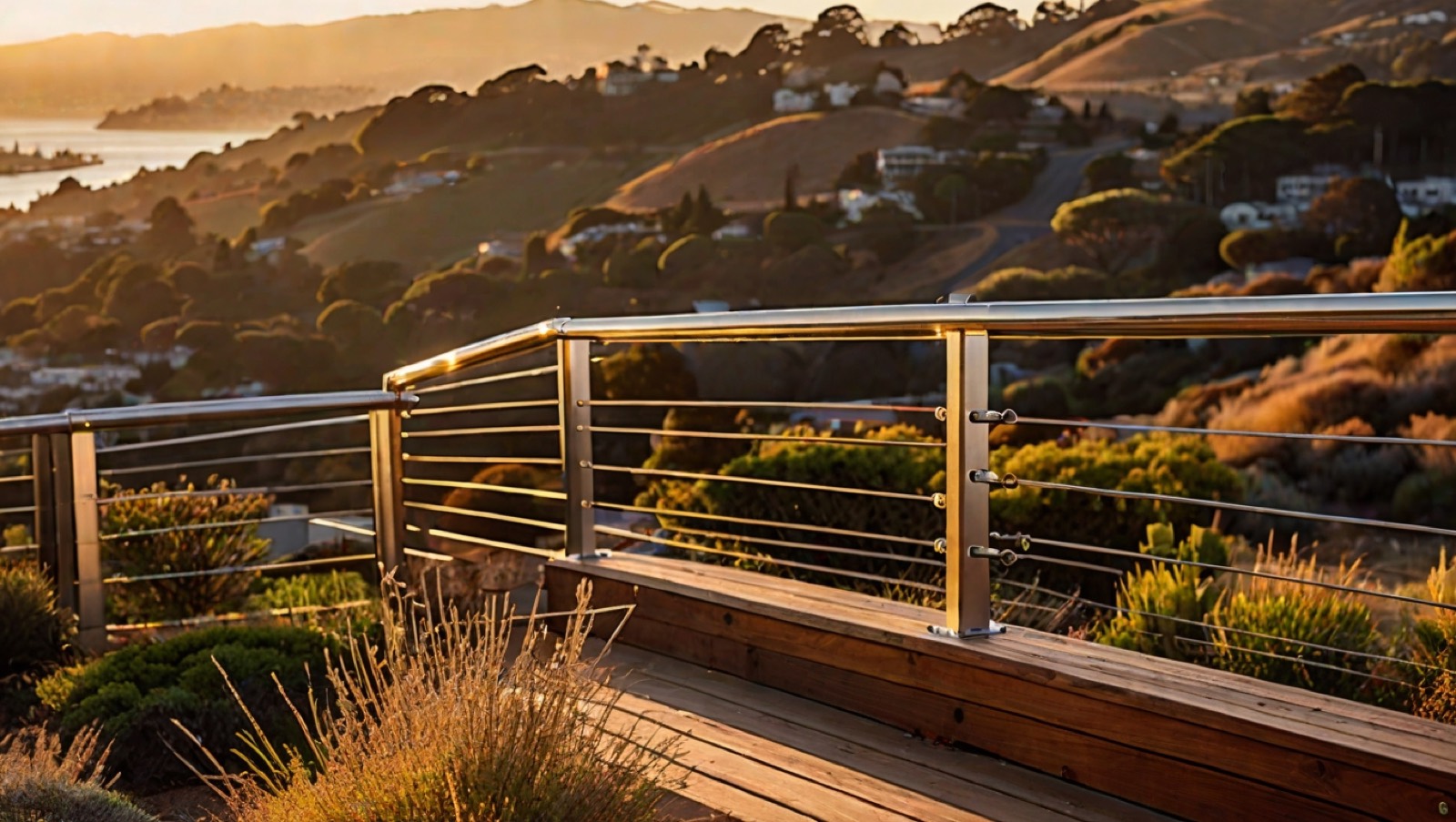
On a cable railing, tension is safety. Properly tensioned 316 stainless cables stay taut and hold their roughly 3-inch spacing so nothing larger than a 4-inch sphere can pass between them. When cables loosen — from settling, seasonal movement, or hardware wear — they sag, the gaps open up, and the railing quietly falls out of code compliance. If you can push a cable and open a gap wider than a few inches, it needs re-tensioning or hardware service. Our cable railing service handles this.
5. Cracked, chipped, or cloudy glass
Glass panels are strong until they are compromised. Any crack, chip at an edge, or impact damage weakens a tempered panel and can lead to sudden failure, so damaged glass should be replaced, not patched. Cloudy or permanently hazed glass — often from salt etching or failed lamination — is both a look and a durability issue. Also check the standoffs, spigots, or base shoe holding the panels: corroded or loose hardware is as much a problem as the glass itself.
6. Faded, chalky, or peeling finish
A finish that has gone chalky, badly faded, or is peeling is not just ugly — it is your corrosion barrier breaking down. Once powder coat or paint fails, the metal underneath is exposed to salt air and the clock starts. Refinishing at this stage is far cheaper than replacing a rusted railing later. Think of a failing finish as the early-warning light for the corrosion in sign #2.
7. Non-code height or spacing
Older railings often predate current code. If your guard measures shorter than 42 inches, or the gaps between balusters or cables pass a 4-inch sphere, it does not meet today’s standard — a real safety gap and a problem at resale, inspection, or after any incident. This is common on homes that have had decks or stairs modified over the years. Bringing height and spacing up to code is straightforward for a fabricator and worth doing. See the numbers in our code guide.
Repair or replace? We'll tell you honestly
Not every problem means a full replacement — re-anchoring posts, re-tensioning cables, swapping a glass panel, or refinishing can restore many railings. But a guard that is corroded through, anchored into rot, or well below code is often safer and cheaper to replace than to keep patching. We assess the railing, tell you which path makes sense, and handle either — including SB 721 repairs on rental buildings.
The one thing not to do is wait. Every item on this list gets worse and more expensive with time: rust spreads, rot enlarges, loose posts loosen further, and a short guard stays a liability every single day it is in use. A railing is the one part of your home specifically built to catch a fall, so it deserves the same urgency you would give a bad brake or a gas leak. If you spotted your railing anywhere in this list, the safe move is to have it looked at now, while it is still a repair and not an incident.
Notice any of these signs? Get it looked at before it fails. Free repair estimates across the East Bay — call (510) 390-9618 or see our railing repair page.
Questions, Answered
Is a wobbly railing dangerous?
Yes. A guard that moves under a hand push has a failing anchor connection and may not hold someone who leans or falls against it. Have it inspected and repaired promptly — call (510) 390-9618.
Can a rusted railing be repaired, or does it need replacing?
It depends on how deep the corrosion goes. Surface rust caught early can often be refinished, but rust that has pitted the metal or attacked welds and anchors usually calls for replacement. We assess and tell you honestly.
My railing is too short — can you bring it to code?
Yes. We fabricate and install guards that meet the 42-inch height and 4-inch spacing standards, and we can often modify existing railings to comply. See our railing repair page or call (510) 390-9618.

Need Help in Alameda?
Alameda Custom Railing provides fast, same-day custom railing across Alameda, CA and the surrounding area — flat-rate pricing, licensed and insured, with 24/7 emergency service. Landed on this article from a search? Head back to our homepage to see everything we do, or reach out now.